Morning Workout Before Breakfast: What Beginners Should Know
If you prefer to exercise soon after waking up, you may wonder whether you should work out before breakfast or eat something first.
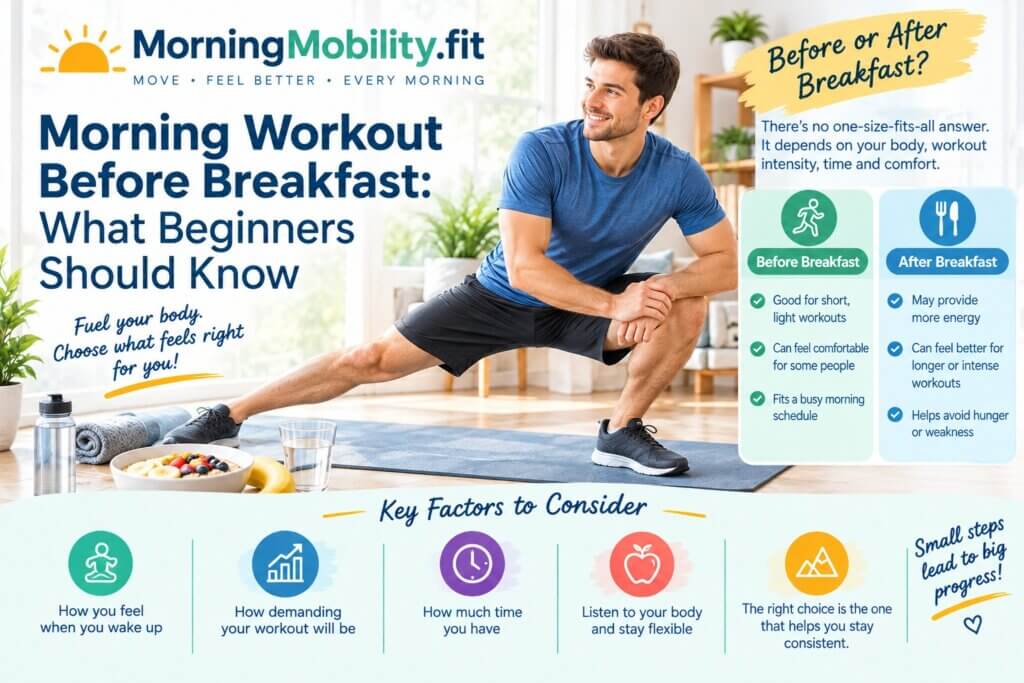
For beginners, there is no universal rule that says you must exercise on an empty stomach or that you must eat before every morning workout. The better approach is to consider the type of workout, how you feel when exercising, how much time you have, and what helps you stay consistent.
A short, easy morning workout may feel comfortable before breakfast for some people. Others may feel better after having something to eat.
This guide explains what beginners should consider when exercising before breakfast, how to choose a suitable workout, and how to build a practical morning routine around your first meal.
In this article
- Can beginners work out before breakfast?
- What does exercising before breakfast mean?
- Should you eat before a morning workout?
- When a fasted workout may feel comfortable
- When eating first may be better
- How workout intensity affects your choice
- What to drink before exercising
- A simple pre-breakfast morning workout
- What to eat after a morning workout
- Morning workouts for busy adults
- Common mistakes beginners should avoid
- Frequently asked questions
Can Beginners Work Out Before Breakfast?
Yes, some beginners can comfortably exercise before breakfast.
A short session of gentle mobility, walking, bodyweight exercises, or an easy workout may be manageable shortly after waking.
However, not everyone feels the same.
Some people wake up feeling ready to move, while others feel hungry, weak, or uncomfortable when exercising without eating.
Your response matters.
If you feel comfortable exercising before breakfast, you can use that time for your workout.
If you feel better after eating, there is no need to force yourself to exercise on an empty stomach.
The goal is to create a routine that you can perform comfortably and consistently.
What Does “Working Out Before Breakfast” Mean?
A pre-breakfast workout simply means exercising before your first meal of the day.
It does not necessarily mean that you should avoid food for a specific number of hours.
For example, you might:
Wake up → drink water → exercise → shower → breakfast
Or:
Wake up → eat a small meal or snack → wait as needed → exercise
Both approaches can fit into a morning routine.
The important difference is how your body responds and whether the timing works with your schedule.
Should You Eat Before a Morning Workout?
There is no single answer for every beginner.
Consider three things:
- How you feel when you wake up
- How demanding your workout will be
- How much time you have before exercise
If you are doing a short, easy workout, you may feel perfectly comfortable exercising before breakfast.
If you plan to perform a longer or more demanding workout, eating beforehand may feel more comfortable for some people.
You can experiment with different approaches rather than assuming one method is automatically better.
When a Pre-Breakfast Workout May Feel Comfortable
A short morning session may be easier to perform before breakfast when the intensity is relatively low or moderate.
Examples include:
- Gentle mobility
- Walking
- Light marching
- Easy bodyweight exercises
- Short beginner workouts
- Gentle stretching
- Movement practice
For example, you could perform a 5-minute morning workout for beginners before eating if that feels comfortable for you.
The shorter duration can also make it easier to fit exercise into a busy morning.
When Eating Before Exercise May Feel Better
Some people may prefer to eat before exercise if they:
- Feel hungry immediately after waking
- Feel weak when exercising without food
- Plan to perform a longer workout
- Are doing a more demanding training session
- Have previously felt uncomfortable exercising without eating
You do not need to ignore these signals simply because you want to exercise first thing in the morning.
If eating first makes your workout feel better, build your routine around that.
Does Workout Intensity Matter?
Yes.
A gentle mobility session and a demanding workout place different demands on your body.
For example:
Easy Morning Mobility
You might perform shoulder rolls, Cat-Cow, hip circles, and gentle bodyweight movements before breakfast.
Moderate Beginner Workout
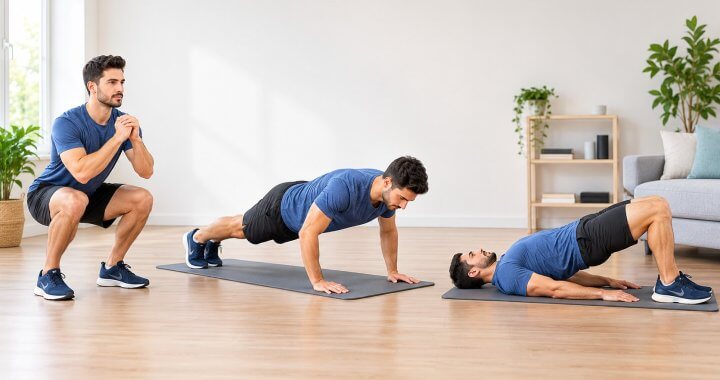
You might perform squats, incline push-ups, glute bridges, lunges, and bird-dogs.
More Demanding Workout
You might perform faster cardio intervals, longer circuits, or more challenging strength exercises.
As intensity and duration increase, some people may prefer having food beforehand.
The right approach is the one that allows you to exercise comfortably and safely.
What Should You Drink Before a Morning Workout?
Water is a simple option when you wake up.
You can drink according to your thirst and normal hydration habits.
You do not need a complicated pre-workout drink for a short beginner workout.
For a normal 5–15-minute home workout, keeping the routine simple is often enough.
If you exercise for longer periods, sweat heavily, or train in a hot environment, your hydration needs may be different.
A Simple Pre-Breakfast Morning Workout
If you feel comfortable exercising before breakfast, you can start with a short routine.
Minute 1 — March in Place
March gently in place.
Swing your arms naturally and gradually increase your pace if comfortable.
Minute 2 — Bodyweight Squats
Perform controlled squats through a comfortable range of motion.
You do not need to move quickly.
Minute 3 — Wall Push-Ups
Stand facing a wall and perform controlled push-ups.
This provides an easier alternative to standard floor push-ups.
Minute 4 — Glute Bridges
Lie on your back with your knees bent.
Lift your hips gently, pause briefly, and lower them under control.
Minute 5 — Bird-Dogs
Start on your hands and knees.
Extend one arm and the opposite leg, return to the starting position, and switch sides.
Finish by breathing comfortably and preparing for breakfast.
If you prefer a slightly longer workout, you can use a 10-minute morning workout for beginners.
Start Gently After Waking
You may feel different immediately after getting out of bed than you do later in the day.
Instead of jumping directly into your hardest exercise, spend a few minutes getting your body moving.
Try:
- Walking around your room
- Marching in place
- Shoulder rolls
- Arm circles
- Gentle hip movements
- Easy squats
A dedicated 5-minute morning warm-up can also help you transition into your workout.
What If You Feel Dizzy or Unwell?
Do not try to push through significant symptoms simply because you planned to exercise before breakfast.
Stop the workout if you feel unusually dizzy, faint, weak, or unwell.
Sit or lie down somewhere safe and allow yourself to recover.
If symptoms are severe, persistent, recurrent, or concerning, seek appropriate medical advice.
If you repeatedly feel unwell when exercising before breakfast, changing your workout timing or eating beforehand may be worth considering with a healthcare professional.
Should You Exercise Before Breakfast for Weight Loss?
Exercise timing by itself does not determine whether you lose weight.
Body weight is influenced by multiple factors, including overall energy intake, energy expenditure, physical activity, sleep, and other aspects of your lifestyle.
Choosing to exercise before breakfast does not automatically make a workout more effective for weight loss.
Instead, focus on creating an exercise routine that you can maintain.
If exercising before breakfast makes it easier for you to stay consistent, it can be a convenient part of your routine.
If you prefer eating first, that can work too.
What Should You Eat After a Morning Workout?
After exercising, you can continue with your normal breakfast routine.
A balanced breakfast can include foods such as:
- Eggs
- Yogurt
- Oatmeal
- Fruit
- Whole-grain toast
- Milk
- Nuts or seeds
The exact meal depends on your preferences, dietary needs, and overall eating pattern.
You do not need a special “post-workout breakfast” after every short beginner workout.
For a short 5–10-minute session, your normal breakfast may be completely adequate.
What If You Have Only a Few Minutes Before Work?
A short pre-breakfast workout can fit into a busy morning.
For example:
6:30 — Wake up
6:35 — 5-minute workout
6:40 — Shower
6:50 — Breakfast
7:10 — Begin the rest of your morning
Your exact schedule will vary, but the principle is simple.
You do not need to reserve an entire hour for exercise.
A short routine can be enough to get movement into the morning.
Morning Workouts for Busy Adults
If your mornings are unpredictable, use different workout durations.
Very Busy Morning
Do 5 minutes.
Normal Morning
Do 10 minutes.
More Available Time
Do 15–20 minutes.
This allows you to keep exercising even when your schedule changes.
You can also use the 7-day morning workout plan for beginners to organize workouts, mobility, and recovery across the week.
What If You Prefer Breakfast First?
There is nothing wrong with eating before your workout.
You may prefer breakfast first if you wake up hungry or if exercising without food makes you uncomfortable.
In that case, give yourself enough time to feel comfortable before starting the workout.
The exact amount of time needed can vary depending on what and how much you eat.
A lighter meal or snack may feel different from a large breakfast.
Pay attention to your own comfort rather than following a rigid rule.
What If You Are Not Hungry in the Morning?
If you wake up without much appetite and feel comfortable exercising, you may choose to work out before breakfast.
A short beginner workout can fit naturally into this routine.
For example:
Wake → water → workout → breakfast
If your workout becomes longer or more demanding, reassess how you feel.
Your needs may change as your training changes.
Morning Mobility Before Breakfast
Mobility work can be a particularly simple option before breakfast.
You could spend 5–10 minutes performing:
- Shoulder rolls
- Arm circles
- Cat-Cow
- Thoracic rotations
- Standing side reaches
- Hip circles
- Bodyweight squats
- Gentle full-body reaches
If you wake up feeling stiff, a mobility-focused morning may be more appropriate than immediately performing a demanding workout.
You can use a 10-minute morning mobility routine for beginners as a structured option.
Common Mistakes Beginners Should Avoid
Assuming Fasted Exercise Is Always Better
Exercising before breakfast is a scheduling choice, not a requirement.
You do not need to exercise without eating simply because someone else does.
Ignoring How You Feel
If you consistently feel weak or uncomfortable exercising before breakfast, change your approach.
Try eating first or reducing the workout intensity.
Starting With a Hard Workout
Your body may need some time to transition from sleep to exercise.
Start gradually.
Forgetting Hydration
Keep water available and drink according to your normal needs.
Making Breakfast Too Complicated
After a short beginner workout, you generally do not need an elaborate recovery meal.
A normal balanced breakfast can fit into your routine.
Using Exercise Timing as a Weight-Loss Shortcut
The timing of your workout is only one part of a much larger picture.
Focus on regular physical activity and sustainable habits.
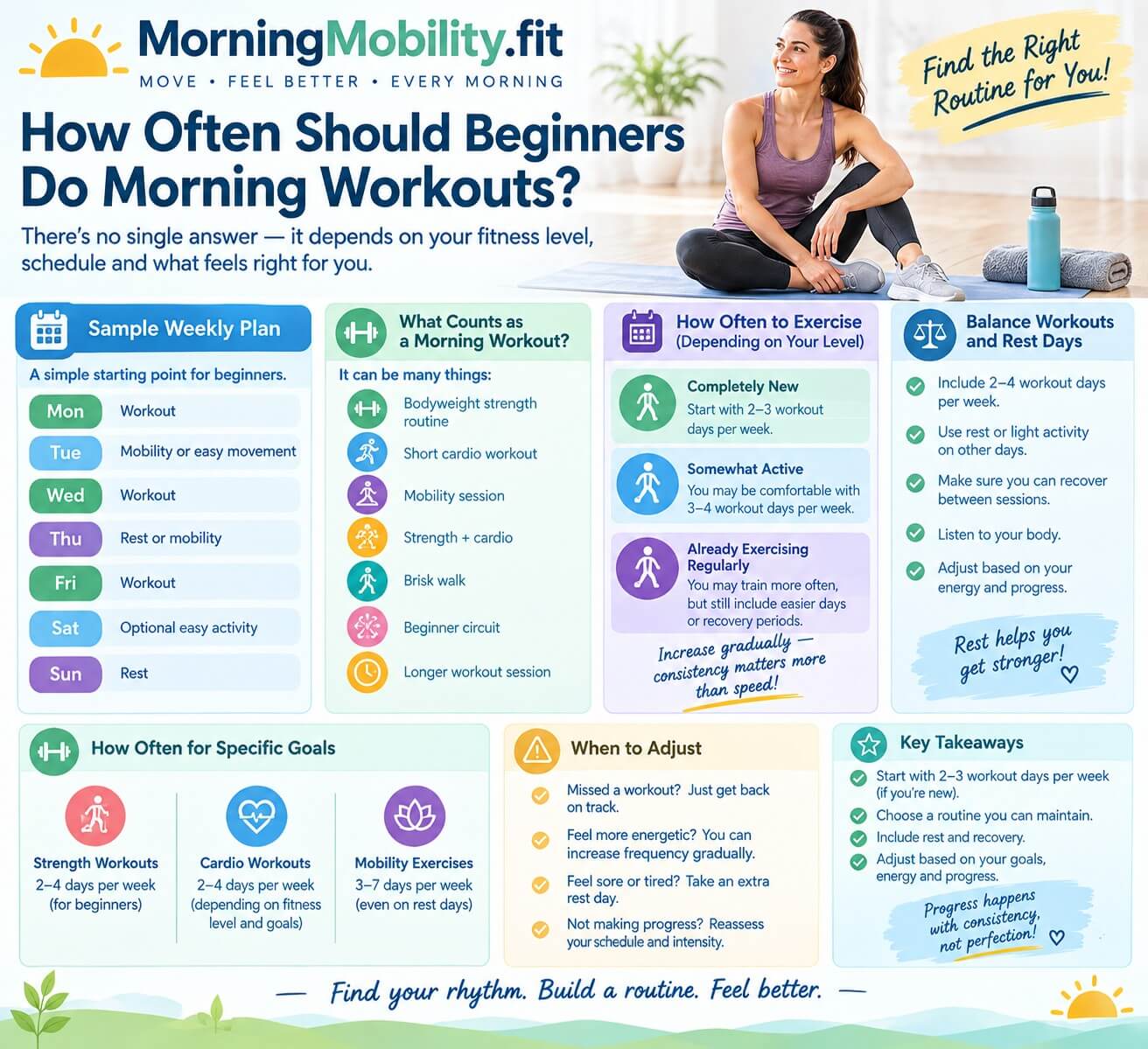
A Simple Weekly Morning Routine
If you prefer exercising before breakfast, you can organize your week like this:
| Day | Morning Activity |
| Monday | 10-minute full-body workout |
| Tuesday | 5–10 minutes of mobility |
| Wednesday | 10-minute workout |
| Thursday | Rest or easy movement |
| Friday | 10–15-minute workout |
| Saturday | Optional walk or mobility |
| Sunday | Rest |
Breakfast can follow each morning session according to your normal schedule.
This is only an example. You can change the workout days and durations based on your availability and recovery.
How to Build a Sustainable Pre-Breakfast Routine
If you want to exercise before breakfast regularly, make the routine easy to start.
Try preparing everything the night before.
You can:
- Put your workout clothes somewhere accessible
- Decide which workout you will perform
- Keep your workout space clear
- Set aside 5–15 minutes
- Keep water available
- Plan your breakfast ahead of time
The fewer decisions you need to make after waking, the easier it can be to get started.
For additional habit-building strategies, see How to Build a Morning Workout Routine You Can Actually Stick To.
Frequently Asked Questions
Is it okay to work out before breakfast?
Yes. Some people are comfortable exercising before breakfast, particularly when the workout is short or moderate. Others feel better eating first.
Is it better to exercise before or after breakfast?
Neither approach is automatically better for everyone. Choose the timing that fits your schedule and allows you to exercise comfortably.
Can beginners do a fasted workout?
Some beginners can comfortably perform short, easy workouts before eating. If you feel weak, dizzy, or unwell, stop and reconsider the timing or intensity of your workout.
Should I drink water before a morning workout?
Water is a simple option when you wake up. Drink according to your thirst and normal hydration habits.
Can I do a 5-minute workout before breakfast?
Yes. A short bodyweight or mobility routine can be a practical pre-breakfast workout for beginners.
Should I eat after a morning workout?
You can follow your normal breakfast routine after exercising. The exact meal depends on your dietary preferences and overall nutritional needs.
Does exercising before breakfast burn more fat?
Exercise timing alone does not determine long-term weight loss. Overall energy balance and lifestyle factors are more important when considering changes in body weight.
Can I do strength training before breakfast?
You can perform strength-oriented exercises before breakfast if you feel comfortable doing so. Start with manageable exercises and adjust the timing if you feel weak or uncomfortable.
What should I do if I feel hungry before exercising?
If hunger makes it difficult to exercise comfortably, consider having something to eat before your workout rather than forcing yourself to train without food.
Can I exercise immediately after waking?
You can exercise soon after waking if you feel comfortable. Starting with a few minutes of gentle movement can make the transition into exercise easier.
The Bottom Line
You do not have to choose between breakfast and exercise based on a universal rule.
Some beginners can comfortably work out before breakfast, while others feel better after eating.
A short morning workout can be a convenient way to exercise before starting the day, particularly when you have limited time.
Start gently, pay attention to how you feel, stay hydrated according to your normal needs, and choose a workout duration and intensity that you can manage consistently.
The best pre-breakfast routine is one that fits your schedule and allows you to exercise comfortably.

Alex — MorningMobility.fit Editorial TeamAlex is part of the MorningMobility.fit editorial team, creating practical beginner-friendly workout and mobility guides for busy adults. Content focuses on simple morning movement, no-equipment exercises, mobility routines, and realistic ways to build consistent exercise habits. Articles are designed for general fitness education and are not a substitute for individualized medical or fitness advice.