Morning Workout Routine for Beginners: A Complete Guide
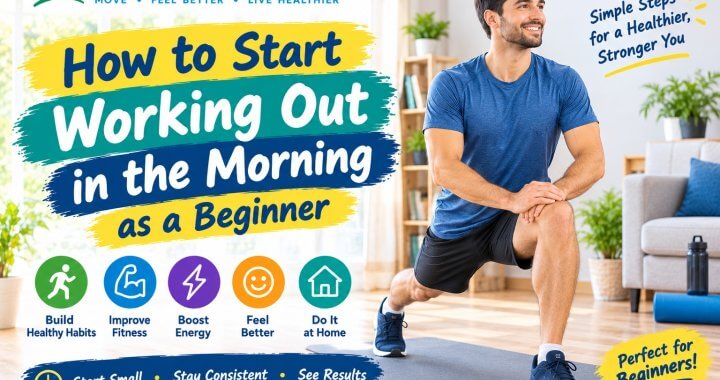
Starting a morning workout routine can be one of the simplest ways to make exercise a regular part of your day. You do not need a gym membership, expensive equipment, or an hour of free time. For beginners, a simple routine that fits naturally into your morning can be enough to build consistency and improve how you feel throughout the day.
The key is to start at a level you can repeat. A short, manageable workout is often more practical than an ambitious routine that becomes difficult to maintain.
This guide explains how to build a beginner-friendly morning workout routine, what exercises to include, how long to exercise, how often to train, and how to adjust your routine as you become more comfortable with movement.
In this article
- Why morning workouts can work well for beginners
- How to build a morning workout routine
- How long a beginner morning workout should be
- A simple 10-minute beginner routine
- How to warm up before exercising
- How often beginners should work out
- How to progress safely
- Morning workouts when you are short on time
- Morning workouts for people who sit all day
- Common beginner mistakes
- Sample weekly morning workout schedule
- Frequently asked questions
Why Start a Morning Workout Routine?
A morning workout does not have to be intense to be useful.
For many beginners, the biggest benefit is creating a consistent opportunity to move before the rest of the day becomes busy. Work, family responsibilities, commuting, appointments, and other tasks can make it harder to find time later.
A morning routine gives you a specific part of the day dedicated to movement.
It can also help you establish a predictable exercise habit. Instead of deciding every day whether you will exercise, you can make movement part of your normal morning.
If you are completely new to exercise, you can start with a 5-minute morning workout for beginners and gradually increase the duration.
The goal is not to make every morning workout difficult.
The goal is to make exercise something you can consistently do.
Who Should Use a Beginner Morning Workout Routine?
A beginner-friendly morning routine can work well for adults who:
- Are new to regular exercise
- Have limited time in the morning
- Prefer exercising at home
- Do not have workout equipment
- Want a simple routine to follow
- Spend much of the day sitting
- Want to develop an exercise habit
- Prefer short workouts over long gym sessions
You also do not have to be a traditional “morning person.”
If you have more energy later in the day, you can exercise later. A morning workout is simply one option for organizing your exercise routine.
How to Build a Morning Workout Routine
A balanced beginner routine does not need dozens of exercises.
Start with a few basic movement patterns and organize them into a simple sequence.
A practical morning workout can include:
- A short warm-up
- Lower-body movement
- Upper-body movement
- Core or stability work
- A short mobility section
- Easy recovery breathing
This gives you a simple structure without making the workout unnecessarily complicated.
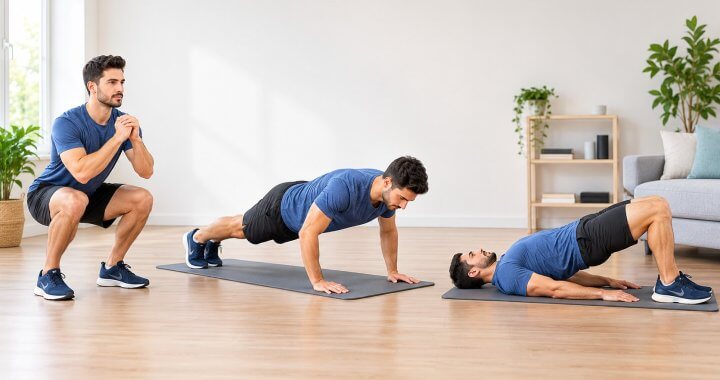
For example, you could combine squats, incline push-ups, glute bridges, bird-dogs, and a few mobility exercises.
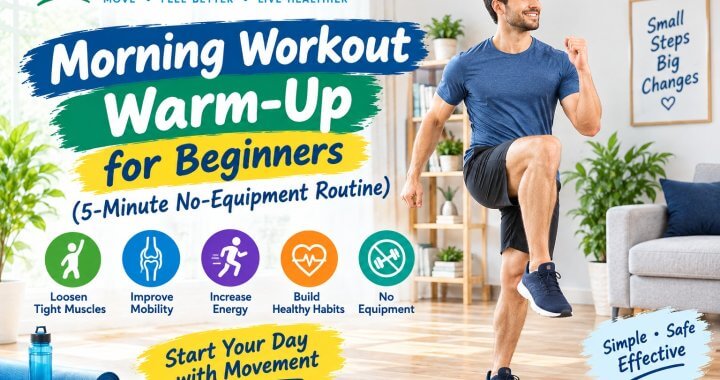
If you want more movement preparation before exercising, try this 5-minute morning warm-up for beginners.
Start With a Warm-Up
You may feel stiff when you first get out of bed, especially if you spent much of the previous day sitting.
A short warm-up gives you time to gradually transition from resting to exercise.
Your warm-up could include:
- Marching in place
- Shoulder rolls
- Arm circles
- Gentle hip circles
- Easy bodyweight squats
- Cat-Cow
- Light walking
You do not need to turn the warm-up into another workout.
Keep the movements controlled and comfortable.
If mobility is a bigger priority for you, you can also use a dedicated morning mobility routine for beginners.
A Simple 10-Minute Morning Workout for Beginners
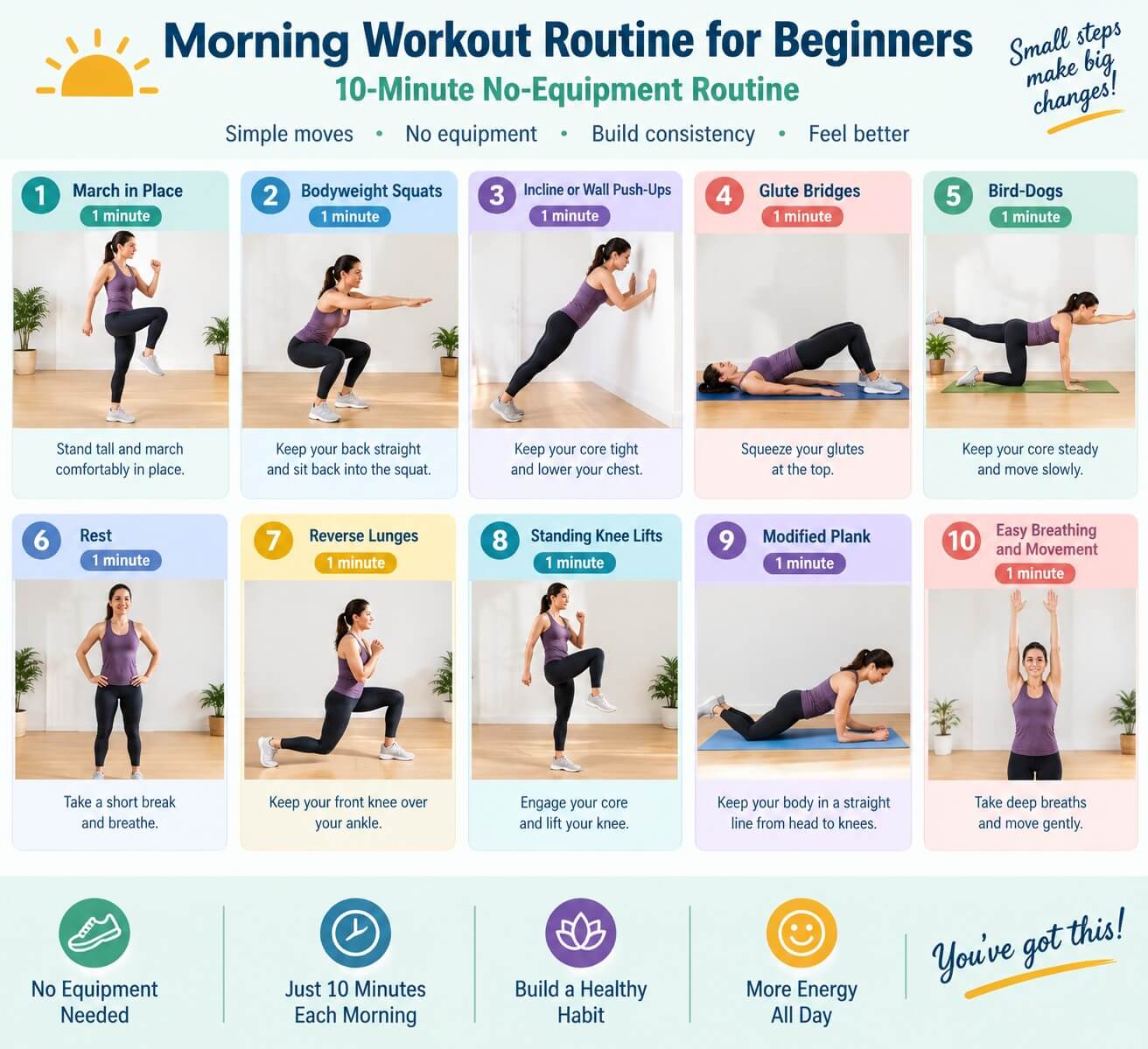
Here is an example of a basic no-equipment routine.
You can perform the exercises in order and take short breaks whenever necessary.
| Exercise | Time |
|---|---|
| March in place | 1 minute |
| Bodyweight squats | 1 minute |
| Incline or wall push-ups | 1 minute |
| Glute bridges | 1 minute |
| Bird-dogs | 1 minute |
| Rest | 1 minute |
| Reverse lunges | 1 minute |
| Standing knee lifts | 1 minute |
| Modified plank | 1 minute |
| Easy breathing and movement | 1 minute |
1. March in Place
Stand tall and begin marching comfortably in place.
Swing your arms naturally and gradually increase your pace if it feels comfortable.
This is an easy way to begin moving without immediately jumping into a demanding exercise.
2. Bodyweight Squats
Stand with your feet approximately hip- to shoulder-width apart.
Lower your hips toward the floor while keeping your chest reasonably upright. Then push through your feet to return to standing.
You do not need to squat deeply.
Use a comfortable range of motion and focus on controlled repetitions.
3. Incline or Wall Push-Ups
If standard push-ups are difficult, use a wall or sturdy elevated surface.
Keep your body controlled as you lower your chest toward the surface, then push yourself away.
As you become stronger, you can gradually use a lower surface or progress toward floor push-ups.
4. Glute Bridges
Lie on your back with your knees bent and your feet on the floor.
Press through your feet and lift your hips gently. Pause briefly at the top, then lower your hips under control.
Avoid turning the movement into a fast bouncing motion.
5. Bird-Dogs
Start on your hands and knees.
Extend one arm and the opposite leg while keeping your torso stable. Return to the starting position and switch sides.
Move slowly rather than trying to complete as many repetitions as possible.
6. Rest
Take a short break.
Walk around, breathe normally, and drink some water if needed.
A rest period is not wasted time. Beginners often benefit from allowing enough recovery to maintain good movement quality.
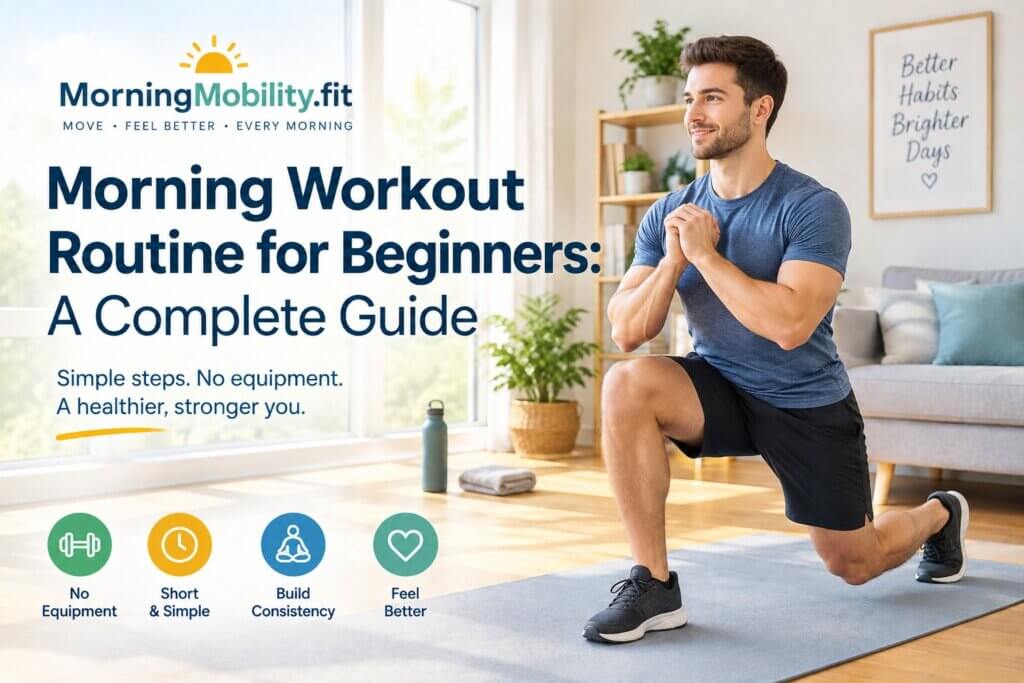
7. Reverse Lunges
From a standing position, step one foot backward and lower yourself toward a comfortable range.
Push through the front foot to return to standing.
If balance is difficult, hold onto a stable surface for support or use a smaller range of motion.
8. Standing Knee Lifts
Stand upright and lift one knee toward your comfortable range before lowering it.
Alternate sides.
You can perform the movement slowly or increase the pace slightly if you are comfortable.
9. Modified Plank
Use a variation that matches your current ability.
You can start with your knees on the floor or use an elevated surface.
Keep your body controlled rather than holding the position for as long as possible.
10. Easy Breathing and Movement
Finish with a few minutes of relaxed movement.
Take slow breaths and allow your heart rate to gradually settle.
You can also perform gentle shoulder, hip, or upper-back movements before getting ready for the rest of your day.
How Long Should a Beginner Morning Workout Be?
There is no single perfect workout length for every beginner.
A useful starting point is 5 to 15 minutes.
If you have only a few minutes, a 5-minute routine can still give you an opportunity to practice movement and establish consistency.
If you have more time, you can gradually build toward 10, 15, or 20 minutes.
For example:
- 5 minutes: quick movement session
- 10 minutes: balanced beginner routine
- 15 minutes: more complete workout or mobility session
- 20 minutes: additional exercises, conditioning, or mobility
You can also use different durations on different days.
For example, a busy weekday might involve a 5-minute workout while a less busy morning allows 15 or 20 minutes.
What If You Only Have 5 Minutes?
Do not assume that a short morning means you should skip exercise completely.
A 5-minute workout can be useful as a starting point .If you prefer a cardio-focused option, try this 5-minute morning cardio workout for beginners.
You could perform:
- 1 minute of marching
- 1 minute of squats
- 1 minute of wall or incline push-ups
- 1 minute of glute bridges
- 1 minute of bird-dogs
You can also use your five minutes for mobility instead of a traditional workout.
The important distinction is that a short workout is not automatically equivalent to a longer workout. A five-minute session gives you less total training time, so it should be viewed as a practical way to get moving rather than a replacement for every longer workout.
What If You Have 15 or 20 Minutes?
More time gives you additional options.
You could perform a longer strength-focused routine, add mobility work, include more recovery between exercises, or complete additional sets.
For example, you can follow a 15-minute morning workout for busy adults when you have more time available.
On another day, a 20-minute morning workout for busy adults may fit your schedule.
You do not need to use the longest workout available every day.
Morning Mobility vs. Morning Workout
Mobility and exercise are related, but they are not exactly the same thing.
A mobility routine focuses primarily on controlled movement through comfortable ranges of motion.
A workout may place more emphasis on strength, cardiovascular fitness, muscular endurance, or conditioning.
You can include both.
For example:
Morning mobility → strength exercises → easy cooldown
Or:
Short workout → mobility exercises → breathing
If you wake up feeling particularly stiff, starting with mobility may feel more appropriate than immediately performing faster or more demanding movements.
Morning Workouts for People Who Sit All Day
If your day involves many hours at a desk, your morning routine can be an opportunity to move areas that spend long periods in relatively fixed positions.
Consider including:
- Shoulder rolls
- Arm circles
- Cat-Cow
- Thoracic rotations
- Hip circles
- Bodyweight squats
- Glute bridges
- Bird-dogs
- Standing side reaches
You can also add short movement breaks throughout the workday.
Our morning workout for desk workers provides another option for people who spend much of their day sitting.
How Often Should Beginners Do Morning Workouts?
Consistency matters more than trying to exercise as hard as possible every morning.
A beginner might start with three mornings per week.
For example:
- Monday — Morning workout
- Tuesday — Mobility or easy movement
- Wednesday — Morning workout
- Thursday — Rest or light movement
- Friday — Morning workout
- Saturday — Optional walk or mobility
- Sunday — Rest
As your routine becomes easier to maintain, you can adjust the frequency.
You do not need to make every session a hard workout.
Some mornings can be dedicated to mobility or easy movement while others focus on strength or cardio.
A structured 7-day morning workout plan for beginners can also help you organize different types of movement throughout the week.
How to Progress Your Morning Workout
You do not need to make dramatic changes from week to week.
Progress gradually.
You could increase:
- Workout duration
- Number of repetitions
- Number of sets
- Exercise difficulty
- Movement control
- Range of motion
- Recovery between sessions
For example, you might begin with 5 minutes and later move to 10 minutes.
Or you might start with wall push-ups before progressing to incline push-ups.
The goal is to give your body a manageable reason to adapt without making every workout exhausting.
When Should You Increase the Difficulty?
Consider progressing when your current routine feels consistently manageable and you can perform the movements with good control.
For example, if you can comfortably complete your current squats without losing control, you might gradually increase repetitions or use a slightly more challenging variation.
Do not increase everything at once.
Changing the duration, intensity, repetitions, and exercise difficulty simultaneously can make it harder to understand how your body is responding.
Make one small adjustment at a time.
Should You Exercise Before Breakfast?
Some beginners prefer exercising before breakfast, while others feel more comfortable eating first.
There is no requirement that every morning workout must happen on an empty stomach.
Your individual schedule, appetite, workout intensity, and comfort all matter.
If exercising immediately after waking feels uncomfortable, give yourself more time before beginning.
For a short and easy workout, some people may prefer to exercise first and eat afterward. Others may feel better having something to eat beforehand.
Choose the approach that allows you to exercise comfortably and consistently.
Common Beginner Mistakes
Starting Too Hard
One of the easiest mistakes is turning the first workout into a test of maximum effort.
You do not need to finish your first session exhausted.
Start with movements you can control.
Doing Too Many Exercises
A beginner workout does not need 20 different exercises.
A small number of well-chosen movements can make the routine easier to understand and repeat.
Skipping the Warm-Up
If you feel stiff after sleeping, jumping immediately into demanding movements may not feel good.
Spend a few minutes gradually increasing movement.
Ignoring Recovery
Exercise is only one part of a sustainable routine.
Rest and recovery also matter.
If you are unusually tired or sore, consider reducing the intensity or doing an easier mobility session.
Constantly Changing Your Routine
It can be tempting to search for a completely different workout every morning.
However, repeating basic movements gives you an opportunity to learn technique and notice your progress.
You do not need a new workout every day.
A Simple Weekly Morning Workout Schedule
Here is one example of how a beginner could organize a week.
| Day | Morning Activity |
|---|---|
| Monday | 10-minute full-body workout |
| Tuesday | 5–10 minutes of mobility |
| Wednesday | 10-minute strength-focused workout |
| Thursday | Easy movement or rest |
| Friday | 10–15-minute cardio or full-body workout |
| Saturday | Optional walk and mobility |
| Sunday | Rest |
This is only an example.
Your schedule can be adjusted according to your fitness level, available time, recovery, and other activities.
The important part is having a plan that you can realistically follow.
How to Make Your Morning Workout a Habit
A workout routine becomes easier to maintain when you reduce the number of decisions required to start.
Try preparing the night before.
You can:
- Put your workout clothes somewhere visible
- Decide which workout you will perform
- Keep a small amount of open floor space available
- Set a consistent wake-up time
- Keep your routine short enough to fit your schedule
You can also connect exercise to something you already do every morning.
For example:
Wake up → drink water → move for 10 minutes → shower → breakfast
Repeating the same sequence can make the workout feel like part of your normal routine rather than another task you need to negotiate with yourself.
For more ideas, see how to build a morning workout routine you can actually stick to.
What If You Miss a Morning?
Missing one workout does not mean your routine has failed.
Life happens.
You may sleep poorly, have an early meeting, need to take care of family responsibilities, or simply need a rest day.
Instead of trying to compensate by doing an extremely difficult workout the next day, return to your normal schedule.
If you miss a 20-minute workout, you can also use a shorter session later in the day if it fits your schedule.
Consistency is built over time, not from being perfect every morning.
When to Stop or Modify an Exercise
Beginner workouts should be challenging enough to provide useful movement but not so difficult that you cannot control what you are doing.
Modify an exercise if:
- Your technique is breaking down
- You cannot maintain control
- A movement causes pain
- Your balance is becoming unsafe
- You feel unusually dizzy or unwell
You can reduce the range of motion, slow down, take a break, or choose an easier variation.
If you have an injury, medical condition, or specific health concern, consider getting individualized guidance from an appropriate healthcare or fitness professional before starting a new exercise program.
Frequently Asked Questions
Is a morning workout good for beginners?
A morning workout can be a practical way for beginners to establish a regular exercise habit. The best routine is one that fits your schedule and can be performed consistently.
How long should a beginner morning workout be?
Five to 15 minutes is a practical starting range for many beginners. You can gradually increase the duration as your fitness, confidence, and available time improve.
Can I do a morning workout without equipment?
Yes. Many beginner exercises, including squats, glute bridges, bird-dogs, lunges, marching, and modified push-ups, can be performed without gym equipment.
Should I work out every morning?
You do not have to perform a demanding workout every morning. Beginners can start with several workout days per week and use other mornings for mobility, walking, or rest.
Can I exercise immediately after waking up?
You can exercise shortly after waking if you feel comfortable doing so. A few minutes of gentle movement can help you transition into the workout.
What should I do if I feel stiff in the morning?
Start with gentle mobility movements such as marching, shoulder rolls, Cat-Cow, hip circles, and controlled bodyweight movements. If stiffness persists or is associated with pain, seek appropriate professional advice.
Is a 5-minute workout worth doing?
A five-minute workout can be a useful way to practice movement and maintain consistency when you have limited time. It provides less total exercise than a longer session, but it can still be a practical part of an active lifestyle.
Can beginners combine cardio and strength in the morning?
Yes. A beginner routine can combine simple cardiovascular movements such as marching with strength movements such as squats, push-up variations, glute bridges, and lunges.
What should I do after my morning workout?
Allow your breathing and heart rate to settle, drink fluids according to your needs, and continue with your normal morning routine. If your workout was more demanding, give yourself enough time to recover before your next training session.
The Bottom Line
A good beginner morning workout routine does not need to be complicated.
Start with a few basic movements, keep the session manageable, and give yourself enough time to learn the exercises. You can begin with five minutes and gradually work toward longer sessions as your routine becomes easier to maintain.
The most important part is creating a routine that fits your actual life.
Whether you have five minutes before work or 20 minutes on a slower morning, regular movement can become a simple and repeatable part of your day.

Alex — MorningMobility.fit Editorial TeamAlex is part of the MorningMobility.fit editorial team, creating practical beginner-friendly workout and mobility guides for busy adults. Content focuses on simple morning movement, no-equipment exercises, mobility routines, and realistic ways to build consistent exercise habits. Articles are designed for general fitness education and are not a substitute for individualized medical or fitness advice.